Revelation
In the beginning, before all creation, was the Word (Jn. 1:1). Through the Word God communicates, creates, and brings about salvation. Nothing happens without the work of God’s Word. This makes humans aware of a creator because of the grandeur of creation (Ps. 19:1-2). Creation speaks of Him in general terms to humanity. Because of this no one is without knowledge of God. Meaning every human is accountable before Him (Rms. 1:19-20).
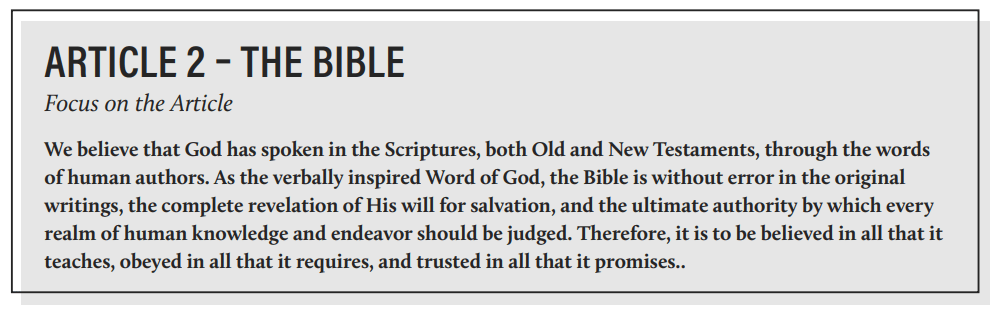
Despite a general knowledge of God and His laws for creation, God has chosen to reveal Himself specifically through the Scriptures (2 Tim. 3:16a). He has done this through human authors so that all might know Him intimately (Mt. 4:4). By the carrying of the Holy Spirit, God used men’s lives, personalities and writing styles to convey his good news message to all (2 Pt. 1:20-21). Because of this we have all we need to know how salvation is attained (Heb. 11:13, 2 Tim 3:15) and how to live faithfully while being sanctified in a fallen world (1 Pt. 1:23).
This saving truth is revealed and applied through the work of the Holy Spirit (2 Cor. 3:16). If the Spirit is not active in a person’s heart, a veil remains. As a result, they will reject the salvific truth of the Bible. (2 Cor. 3:15). Knowledge of the Word illuminated by the Holy Spirit is necessary for salvation (Rms. 10:14-15).
Since, Scripture is from God who can’t lie, it must be inerrant (Tit. 1:2). Without God as the author, the Bible couldn’t be fully trusted to fulfill all it promises (2 Pet. 1:21). Nonetheless, inerrancy can only be applied to the original manuscripts. Yet, since the Bible is the most well-attested and translated book of antiquity, we can trust that the original manuscripts have been faithfully preserved, along with it the original message. Therefore, believers must yield to it as the ultimate authority in their lives (1 Pt. 1:22-23). To do so would be to disobey God directly.
Canon
The Bible consists of sixty-six books, known collectively as the canon. There are thirty-nine books in the Old Testament (Lk. 24:44) and twenty-seven books in the New Testament (1 Tim. 5:18, 2 Pet. 3:15-16). These sixty-six books are universally accepted by all major branches of the universal church as canonical. However, there are other ancient texts such as the Apocrypha, which are historically useful. Yet they’re not accepted by some because they lack authorship of an Apostle or disciples of an Apostle. They have never achieved, or even come close to a universal consensus and the contents were never used as liturgical inspired word of God by Jesus, the Apostles, or early Church Fathers (2 Pet. 2:1-3). With other books claiming authority all teachings should be tested against the sixty-six books of the Bible (1 Jn. 4:1).
As we have it now and forever, the Old and New Testaments agree with one another, not contradicting, but fulfilling the message God intended to reveal (Mat. 5:17). The message is that salvation comes through the Son of God, Jesus Christ. This Gospel encompasses all of scripture from beginning to the end and this Gospel will never pass away (Mt. 24:35).
Therefore, the eternal Word can’t be added to with human words or ideas. (Rev 22:18-19). For anyone who teaches or preaches a different gospel should be accursed (Gal. 1:8-9). Thus, believers are to obey all the Bible commands to walk in righteousness (1 Jn. 2:5). We are to believe all it teaches is trustworthy to sanctify us (Rom. 15:4). We are to hope fully in all its promises of redemption (Heb. 10:23).
Fountain of Life
Anyone walking in the light of the Lord should use the Word of God for all life’s endeavors.
The Word is what the believer should thirst for everyday (1 Pet. 2:2).
The Bible is the fountain God uses to water all good works (2 Tim. 3:17). It is like a fresh spring of water, making the church into a strong and sturdy forest of trees (Ps. 1:3). It leads us to delight in His Word daily as the truth that is saturating our hearts, providing true nourishment for our souls. (Ps. 1:1-2).
 Lit Lamp For The Soul
Leave a comment