
The Battle and the Plea
There comes a point in the battle when it seems someone has decided to pause all that has transpired. While those left standing remain, the smoke slowly rises, twisting upward until it vanishes into the sky. Only as the smoke dissipates can the warmth and light of the sun finally break through.
The dust settles on what was once a fairytale-like field of vibrant green grass. But now, as the air clears, the fairytale is gone. It has become a field of horror — bloodstained ground.
With the settling of the dust and the dissipation of the smoke comes the subsiding of the battle cries that once filled the hateful air. Now, and only now, can the voice of the one caught in the middle be heard.
I am a Bible-believing, Jesus-loving Christian, but you will hear no rallying cry here! There is a far greater authority than anything a right-wing conservative conjures up and places upon the political mantle. Nor will you find a vehement indictment of a non-believing left-wing Democrat. Because there are far worse things in the world than disagreeing with my politics or religious views.
This is a call. No — this is a plea. A plea for unity. Not unity under a cause, nor unity under a flag, nor unity under a political figure, but unity under one loving authority.
Looking Back to Move Forward
I pray this post makes us all question: What are we truly united to? Please join me in looking inward so that we might look outward — beyond what this world has offered to something far greater. I have found nothing on this side of glory that can truly unite such a divide. Politics, materialism, nature, or people cannot achieve this unity. The only way to discover the treasure of unity is to look back in order to move forward.
George Santayana, in his book The Life of Reason, said:
“Those who cannot remember the past are condemned to repeat it.”
How true.
Today let us look back. Not a few weeks, not a few months, not even a few years. Let’s look back a couple of centuries. To a story most Americans know but to a figure few Americans celebrate. A man in the middle, so to speak. We will look at him to follow where he sets his gaze — to what drives and convicts his every decision.
The Forgotten Founder
We must turn the pages of American history back 250 years to a historical event still celebrated today. The 4th of July. It is the day in America where we find the waving of flags, the blasting of fireworks, and songs about the greatness of America. We think of the Declaration of Independence. We think of calm, cerebral, confident George Washington leading the Continental Army across the Delaware River, fiery John Adams pushing independence across the finish line, or Thomas Jefferson drafting the most famous declaration to Great Britain, loudly pronouncing: “We hold these truths to be self-evident.”
But I would rather look to another founding father, often referred to as unknown or underrated. In textbooks he is glossed over — if he appears at all. In pop culture he is too often misrepresented. In HBO’s John Adams, he comes across as a weary old man, cautious to the point of irrelevance. In the Broadway musical Hamilton, he is dismissed altogether, and in the musical 1776 he is cast as a staunch Loyalist — John Adams’s opponent. Yet in reality, he was neither timid, irrelevant, nor a Loyalist. At just forty-three years old during the Continental Congress — the same Congress that audaciously declared American independence — he was sharp, influential, and deeply principled.
I’m speaking of John Dickinson, the Pennsylvania delegate to the infamous Continental Congress.
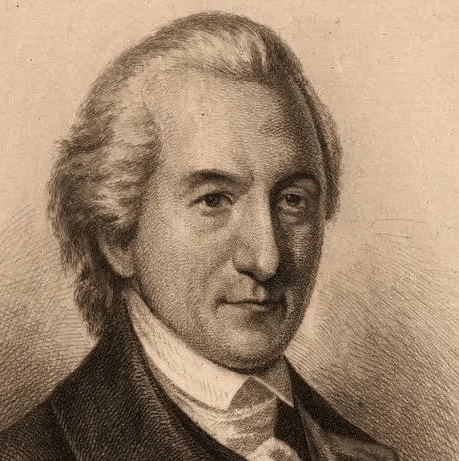
Dickinson was not just another figure of the era. He was just as influential in his writing to the American cause as Thomas Paine or Thomas Jefferson. His Letters from a Farmer were read across the colonies and shared alongside Common Sense. Both works echoed the same sentiment: ‘no taxation without representation.’ He even drafted the Olive Branch Petition, a final attempt to reconcile with the King and Great Britain
However, I remember him more not for what he did but for what he did not do. As you will see, he was a man caught in the middle. Dickinson stood between the extreme cries of revolutionary Patriots for independence and the stubborn steadfastness of Loyalists to Great Britain.
The Pen Over the Sword
We usually hear the phrase, “The pen is mightier than the sword” — and it’s true. But many misconstrue or misplace it along the wrong events in history. Dickinson, I believe, would agree with the phrase. But not in the typical way it is interpreted.
His pen was different from that of Jefferson or Paine, who clamored for taking up arms against one’s enemy. They used the pen to convince people to draw swords. But Dickinson was there in the middle, desperate for reconciliation or, if necessary, independence — but only if his pen could sheath the sword.
Dickinson knew the weight and destruction words can carry. He refused to let his pen lead to needless loss. And if necessary, rather than draw his pen, he would sheath it back onto the desk.
In one of his political writings, he sums up his feelings perfectly:
“Kings or parliaments could not give the rights essential to happiness… We claim them from a higher source — from the King of kings, and Lord of all the earth. They are not annexed to us by parchments and seals. They are created in us by the decrees of Providence, which establish the laws of our nature. They are born with us, exist with us, and cannot be taken from us by any human power, without taking our lives.”
📖 An Address to the Committee of Correspondence in Barbados (1766)
As he so beautifully argues, the taking of human rights leads inevitably to the loss of life. Anything rooted in God is united to God — and therefore worthy of life. These weren’t just words on parchment for Dickinson. They were convictions that shaped how he lived, how he voted, and how he was willing to be remembered — not as a man who sought glory, but as one who sought God.
This is what makes Dickinson so worthy of my gaze. In a time when he was pressured to pick sides, he chose the middle ground — the higher ground. While he defended inalienable rights, he was not willing to be the cause of needless loss of life. Others rushed toward glory. Some clung to power. Dickinson stood almost alone. He risked reputation, influence, and legacy for the sake of conscience. He was not loyal to a country or a cause. He was loyal to his Creator and Savior. And that loyalty carried a cost.
What He Did Not Do
What he did not do should shock you — or at least it should. On that day 250 years ago, 56 delegates gathered to sign the Declaration of Independence. They risked not only their own lives but also the lives of men, women, and children scattered throughout the colonies. We hold men like John Hancock in such high regard. It is not only because of his defiance in the face of power. It is also because he did it with flair and confidence. He and 55 others were openly defying a king and a country. To many Americans, that moment still cries out: ‘That’s right! America!
But Dickinson chose another path. Where so many are praised for their bold signatures, Dickinson chose conviction over applause. Where others grasped for glory, Dickinson chose conscience. Where others sought to make history, Dickinson chose to answer to God.
He abstained from signing the Declaration, even while fully aware of the power and privilege it would cost him. It was, in every sense, political suicide. What guided him to make this decision?
Later, at the Constitutional Convention, Dickinson was quoted as saying:
“Experience must be our only guide. Reason may mislead us.”
📖 John Dickinson, remarks at the Constitutional Convention, June 1787 (recorded in James Madison’s Notes)
He was Santayana before Santayana. He freed his slaves, knowing it would cost him, because he could find no justification in his Bible or under God for such an act as slavery. And even though people were shouting in both his ears for violence, he chose peace.
How could a man withstand so much vitriol? How could he say no with so much at stake? What was his experience that guided him?
His convictions from his experience can be seen in his final words:
“Rendering thanks to my Creator for my existence and station among His works, for my birth in a country enlightened by the Gospel and enjoying freedom, and for all His other kindnesses, to Him I resign myself, humbly confiding in His goodness and in His mercy through Jesus Christ for the events of eternity.”
📖 Last Will & Testament of John Dickinson, March 25, 1808
Everything about Dickinson was decided not by money or power, not by clever ideas or fanatical reason. The Bible and Jesus Christ were the lens through which he viewed the world. He learned from his experience with God and His Holy Word. Dickinson’s convictions came from his deep love for his Lord and Savior, Jesus Christ.
Now we must move our gaze past Dickinson’s example. We need to see what made him so deeply fixed in the middle high ground. Why would a man of wealth, power, and land give up so much? Who — or what experience — taught him that?
The Greater Example
Dickinson’s story reminds me of a 2,000-year-old story — of a Teacher, His students, and the people who opposed Him.
This Teacher eventually became a man caught in the middle, so to speak. One group, His students, longed for a warrior or savior who would overthrow their nation’s enemies — like Washington defeating the British. Another group consisted of the religious leaders and outside rulers. They forced their power on the people. They claimed: “You need us to survive, and this is how you must act.” Similar to Britain’s claims of protection.
Yet this Teacher engaged with both sides. He ate with political leaders, showed compassion to soldiers, and challenged intellectual leaders to consider where their true unity lay. He did this most of all by leading through His example — even to His death.
One night this Teacher was in a garden, praying, while His students slept. During His prayer, a crowd carrying swords and clubs stormed in, ready to arrest Him. He was betrayed with a kiss — one of His own students identifying Him to the mob. Another student, suddenly awoke, lashed out and cut off the ear of a man in the mob.
But the Teacher, caught in the middle, said to His student: “Put your sword back in its place. For all who draw the sword will die by the sword.” Then He healed the ear of the very man who came to arrest Him.
What many did not know was that this Teacher came from a far nobler birth — a Father far greater than the religious rulers and armies of the empire. At His word, He could have called on His Father’s legions and filled the garden with blood and bodies. But instead, He chose the path set before Him — the path of sacrifice, the path of peace. He did not think less of Himself but thought of Himself less.
Where Dickinson, in the end, still took up the sword for the patriot cause, this Teacher chose death. Where Dickinson still had allies, the Teacher’s students fled. And that is because Dickinson was only a man after God’s own heart. This Teacher was God in the flesh — Jesus Christ.
If you haven’t picked up on the story, this is Jesus in the Garden of Gethsemane, before being arrested, flogged, spat upon, mocked, and nailed to a cross. And He chose this path because it was the greater path. He came not to conquer Romans, but to conquer death. Not to expose Jewish hypocrisy, but to redeem humanity. Not to be served but to Serve.
He was nailed there for all who would believe in Him — the Son of the Father who loved the world. He came so that all who should believe in him would have eternal life.
Dickinson did the best he could with the circumstances life presented to him. But I lift Dickinson up here not because he is Christ but because he points to Christ.
I want to be more like Dickinson, because he wanted to be more like Christ.
The Call to True Unity
Dickinson longed for peace, and he tried to unite under it — because that’s what God tells us to do.
But I don’t see this in our world today. And, if I’m honest, I don’t see it in myself as often as I should. From my experiences, I’ve learned one important thing. When we truly seek unity but cannot find it in this world, we face two logical conclusions. Either, one, there is no possibility for unity. This leads to the slippery sad slope of no purpose for the life we’ve been given. Or, two, there is a greater unity we desire.
C.S. Lewis once said that our longings point to something beyond this world. And so, our craving for true unity must also point beyond this world.
Until everyone considers this, no new movement, no political figure, no revolution will satisfy our thirst for unity.
My plea is for all of us — believer and non-believer alike — to ask: What would Jesus do? Not as a cliché, but by actually taking a serious look at who He is, what He says, what He does, and what He offers. He offers a different way — a middle, higher ground: God’s ground.
We as a society have tried everything else. I have not tried everything. However, I have tried many things. None of them nourish, heal, or give peace. Kings and queens will come and go, fading into the mist of history, but only One has remained forever. The Lord remains forever. We must consider uniting under what will last and sustain.
This is me offering to talk and to listen. So I ask you: What do you think will unite us — not just for a while, not for a presidency or fifty years, but for eternity? What do you think will quench our parched lips?
Let’s close with the wisdom of the Apostle Paul and his focus on unity, written to the church in Ephesus:
“Make every effort to keep the unity of the Spirit through the bond of peace. There is one body and one Spirit, just as you were called to one hope when you were called; one Lord, one faith, one baptism; one God and Father of all, who is over all and through all and in all.”
📖 Ephesians 4:3–6
Closing Prayer
Heavenly Father,
The shores of peace feel so far. Yet we are drawn to it, chasing it like a moth drawn to a distant moon — but we will never reach it on our own.
Lord, more than ever, we need the guidance of Your Spirit. We need our eyes and ears opened to see and hear Jesus. Not a glossing over, but a serious introspection of who Your Son is to the world. We need our hearts softened to accept that there is no greater peace than You. There is no true peace on earth apart from You.
Lord, I thank You for the lives You have given — each one so precious in Your sight. I pray that cordial conversations would take place where shouting once existed. I pray that compassion will thrive where violence once reigned. I pray for Your kingdom to come and Your will to be done, that Your peace may reign on earth as it does in Heaven, forever.
In Jesus’ name, Amen.

 Lit Lamp For The Soul
Leave a comment